
Fishing in Roses and on the Costa Brava: everything you need to know before you start
The best spots near Roses
Our recommended fishing spots around the Casdanna Roses holiday apartments – with notes on access, times and protected areas. We also offer special discounts for our fishing‑enthusiast guests. Just check availability and prices and get in touch if you have any questions!
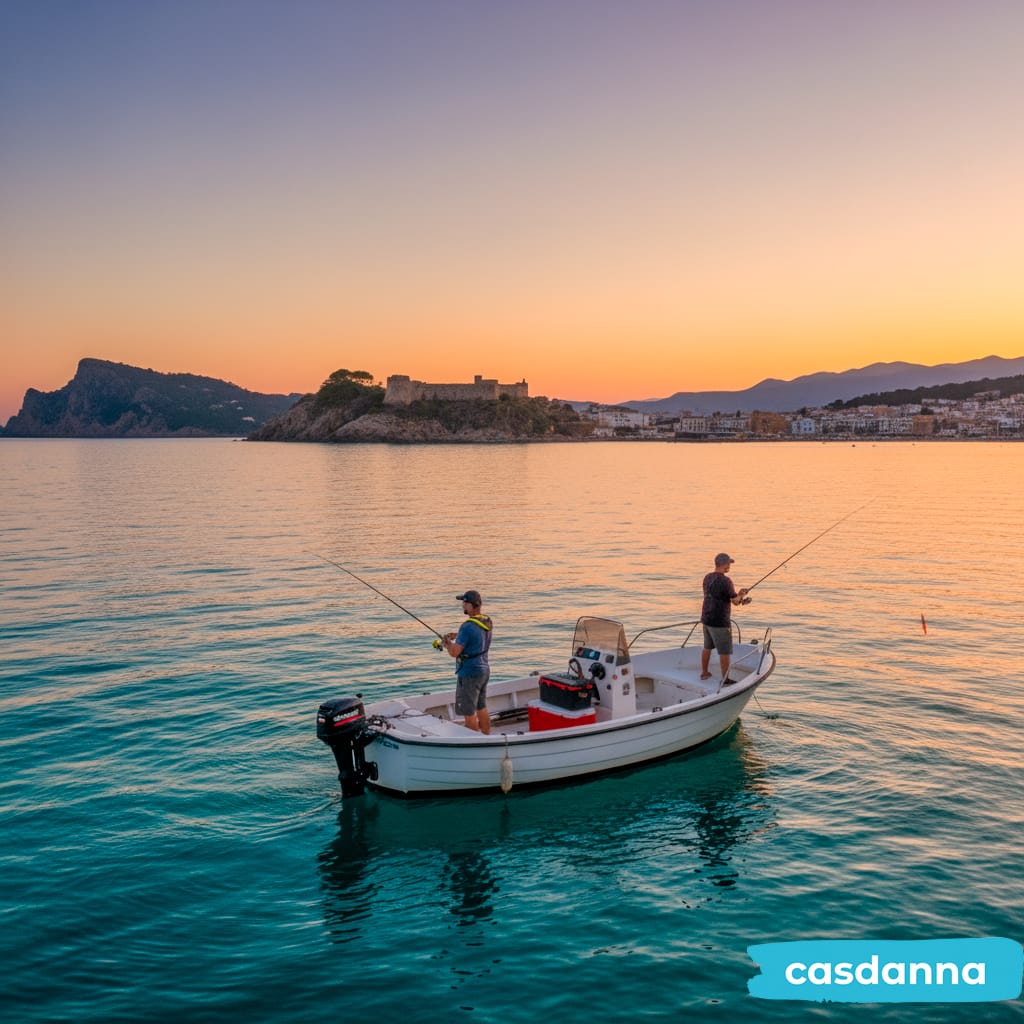
🎣 What can I catch in Roses?
Common species along the Roses coastline and the Costa Brava:
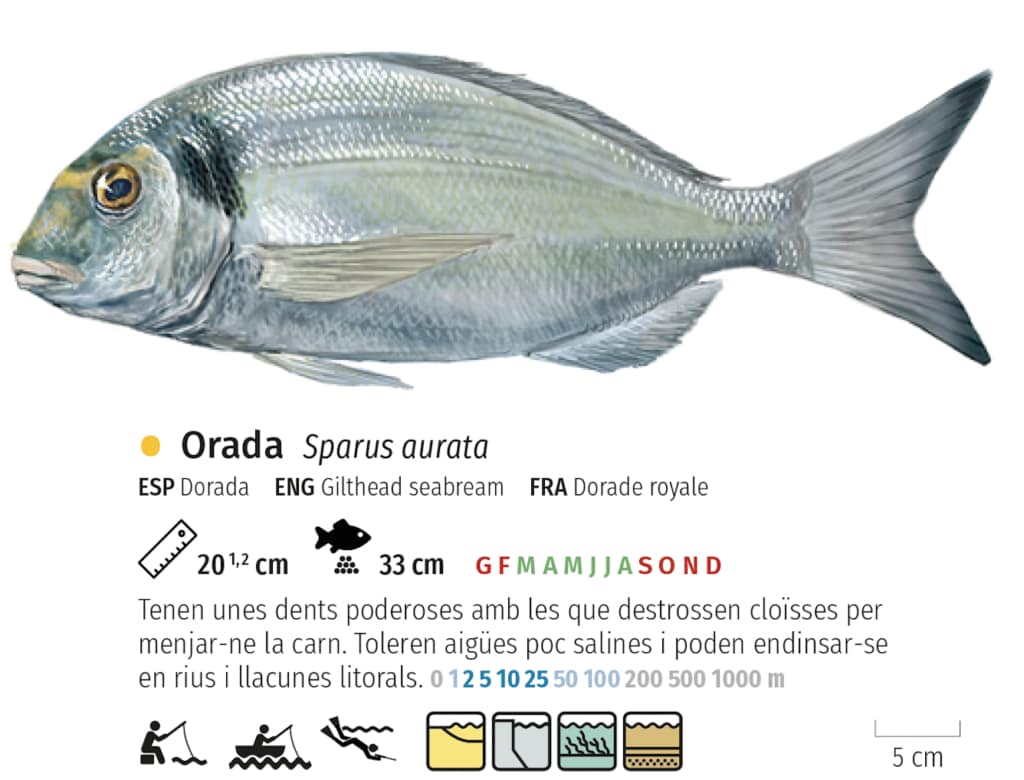
- Gilthead seabream – Sparus aurata. Also known as “dorade”. Wikipedia
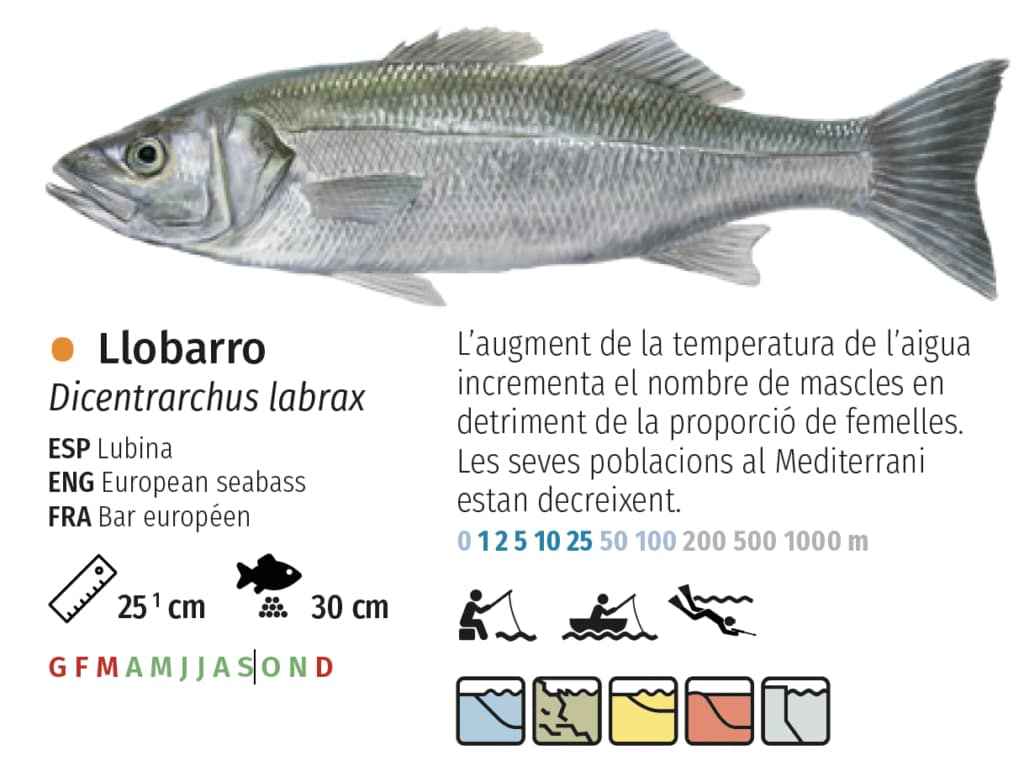
- European seabass – Dicentrarchus labrax. Wikipedia
- Sand steenbras – Lithognathus mormyrus. Wikipedia
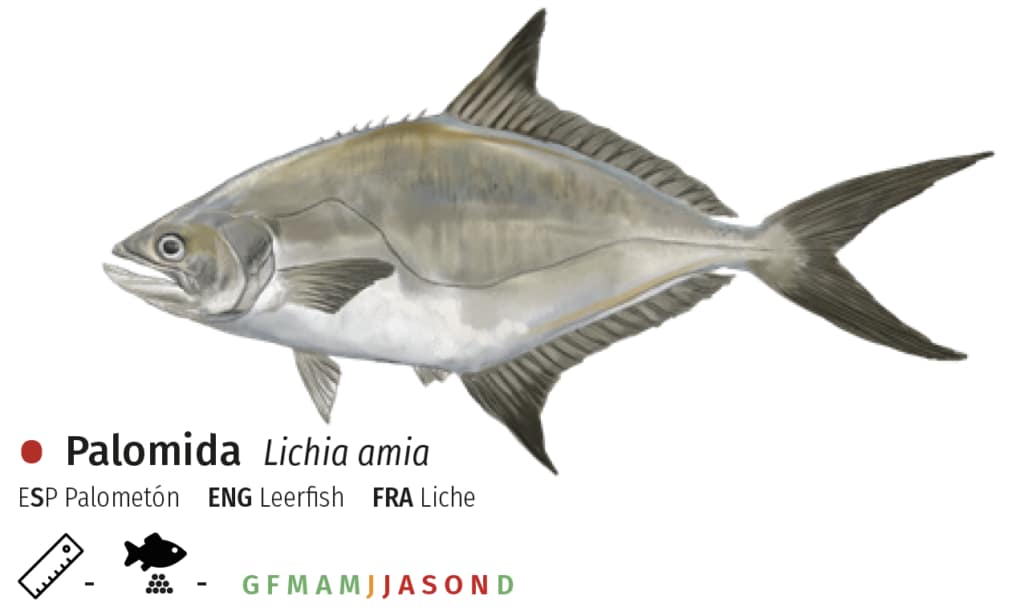
- Leerfish – Lichia amia (also known as “garrick”). Wikipedia
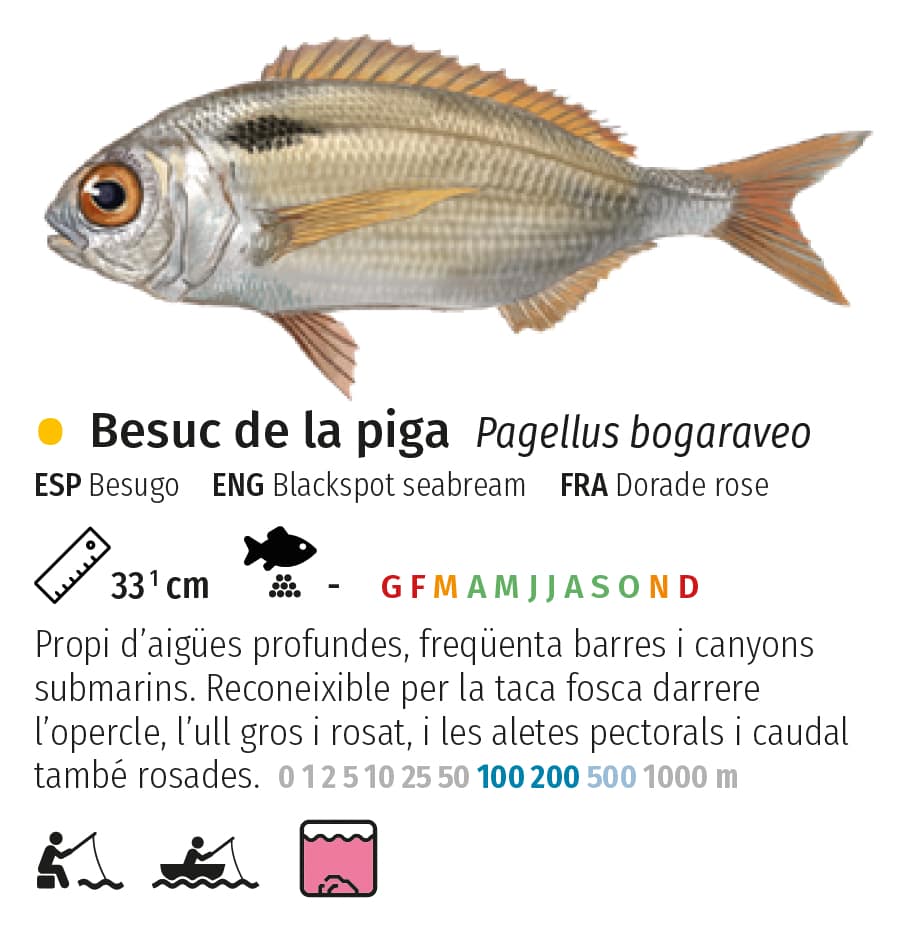
- Blackspot seabream – Pagellus bogaraveo. (Also known as “red seabream”.) Wikipedia
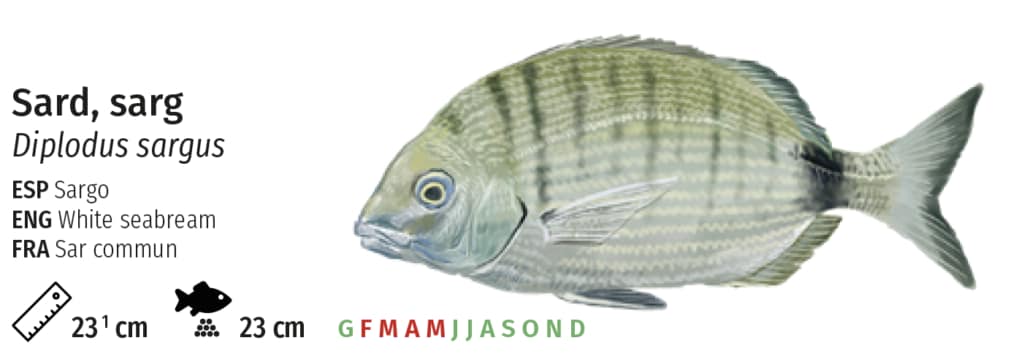
- White seabream – Diplodus sargus. Wikipedia
Species you can catch at Cap de Creus and Sant Pere Pescador.
Do I need a fishing licence in Catalonia?
Yes. Recreational fishing requires a licence — both from the shore and from a boat.
📌 Types of licences
Available for 1, 2 or 15 days, as well as for 1, 2, 3 or 4 years.
You can apply for the licence via the Generalitat website. For visitors from Germany, we provide a form — the link below takes you to the English version:
Catalonia fishing licence form
What does the licence allow?
💡 With a valid licence you can fish in sea waters, except in:
protected areas, harbour zones and certain beach sections during the bathing season.
📌 Code of conduct
The official detailed information on the recreational fishing code of conduct is available in Spanish. Code of conduct for sustainable recreational fishing
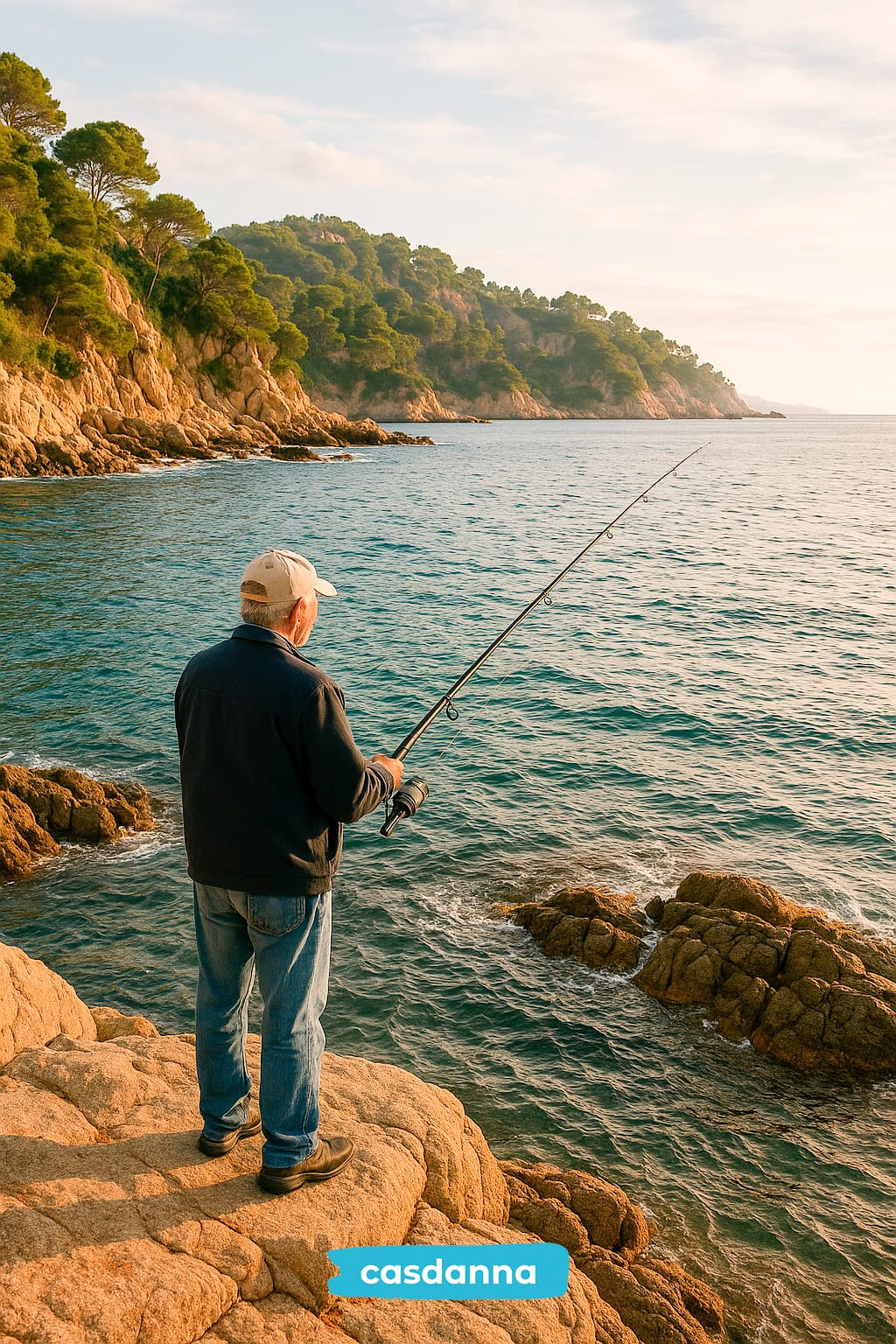
Where is fishing allowed in Roses?
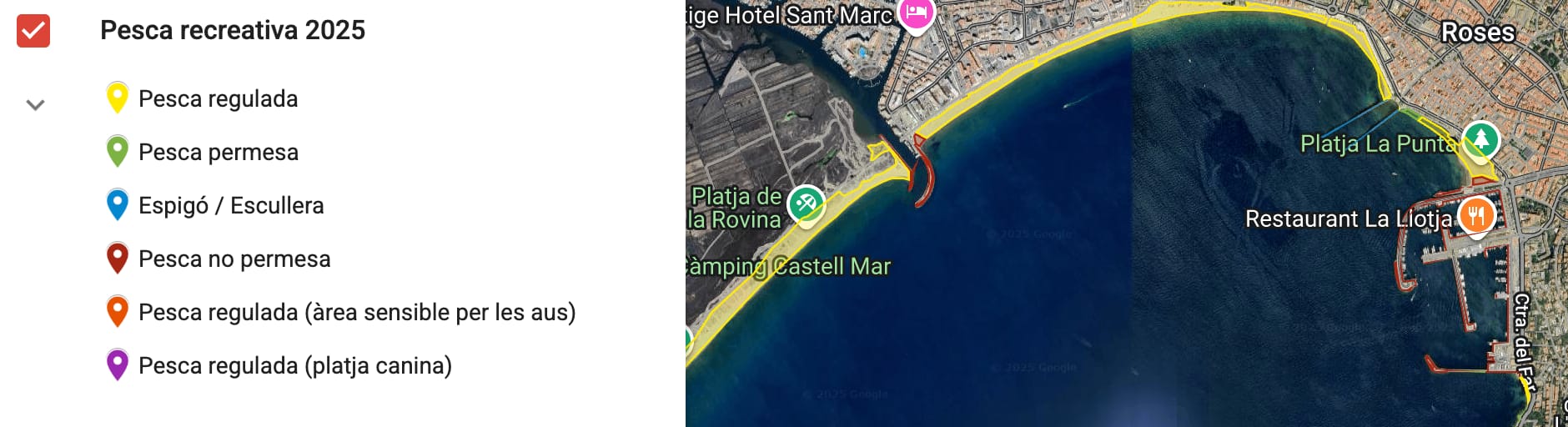
💡 Handy tip: this official map shows which stretches of coast allow recreational sea fishing. It also shows the rules along the Costa Brava — especially during the bathing season (15 May–15 September)
⚠️ General restrictions
Daily catch limits
- Fish: up to 10 kg
- Cephalopods (squid/cuttlefish): up to 5 kg
- Sea urchins: up to 150 (only between 08:00 and 13:00, by hand only)
🕔 Times
- From the shore (rod fishing): 00:00–24:00
- From a boat or when underwater/spearfishing: between sunrise and sunset
📍 Areas/locations
- In principle fishing is allowed; however, between 15 May and 15 September you should check the local authority’s seasonal beach use and services plan.
- Harbours (basins/breakwaters): Fishing is expressly forbidden in operational/safety areas of ports, except in clearly signposted sections where it may be permitted.
👉 Enquiries: Ports de la Generalitat – ports.generalitat@gencat.cat
🛶 Is fishing from a kayak/canoe allowed?
💡 Yes. Fishing from a kayak, Canadian canoe or canoe is treated the same as fishing from a boat.
Spots near Casdanna Roses Apartments
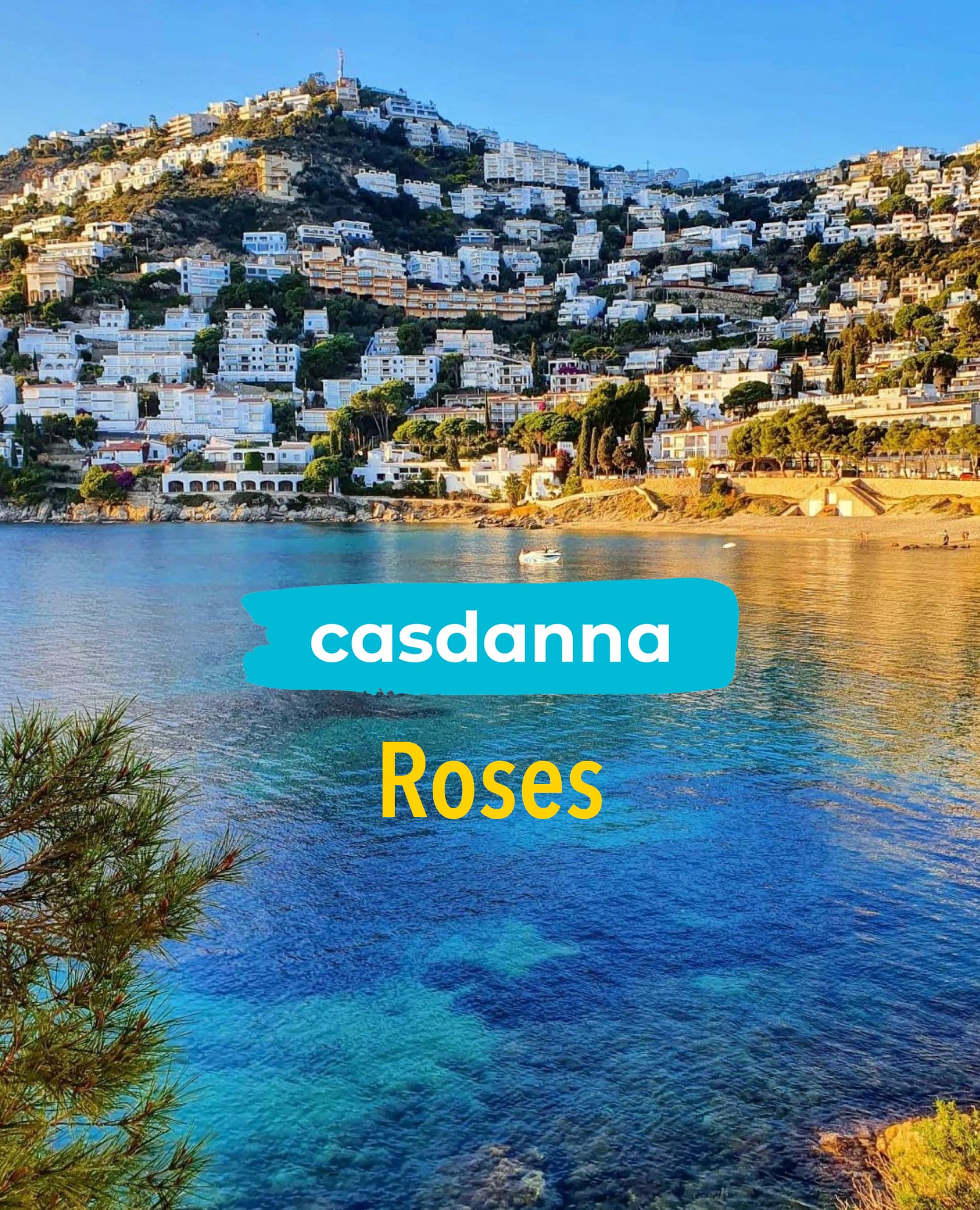
We are located in an ideal setting, right next to Cap de Creus and just 150 meters from Canyelles Petites beach.
Cap de Creus
A special place to fish
Cap de Creus is a special place — geologically and scenically spectacular — and also the easternmost point of the Iberian Peninsula. It’s one of the best fishing areas on the Costa Brava.
The natural park offers a huge variety of landscapes: from peaks close to 700 metres high, to rocky shores and cliffs, and sandy bottoms where you can find, among other species, groupers and conger eels.
Important: this is a strictly protected area.
- Recreational underwater fishing (freediving/spearfishing) is only allowed in the general park zone, not in partial or integral reserves.
- Recreational rod fishing is permitted in the park zone and in partial reserves, but not in the integral marine reserve of Encalladora Island.
- Shore fishing is prohibited in the integral land reserves of Cap de Creus and Cap Norfeu, as there are no designated access points.
Detailed official information on recreational fishing in Cap de Creus is available here in English.
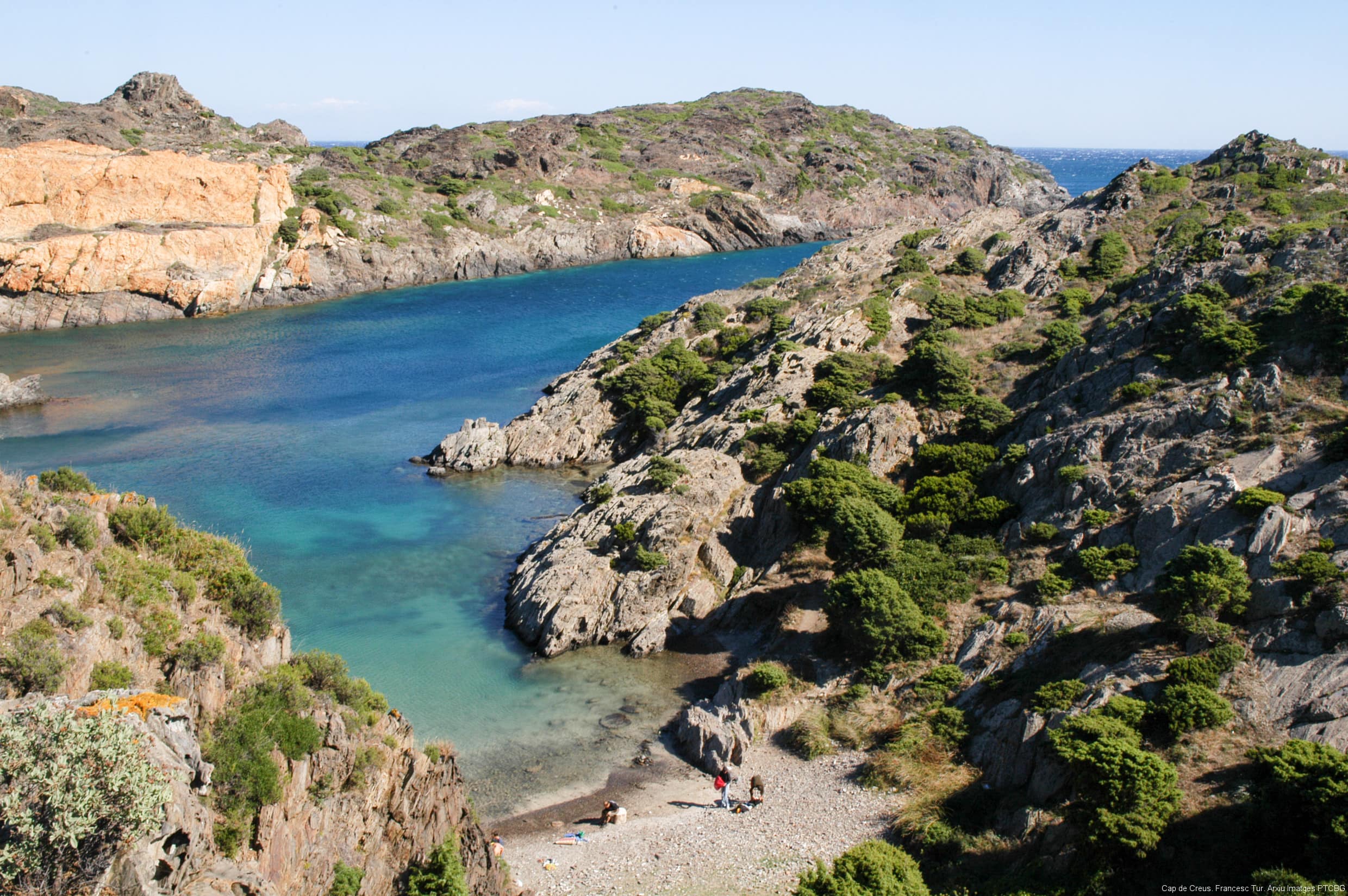
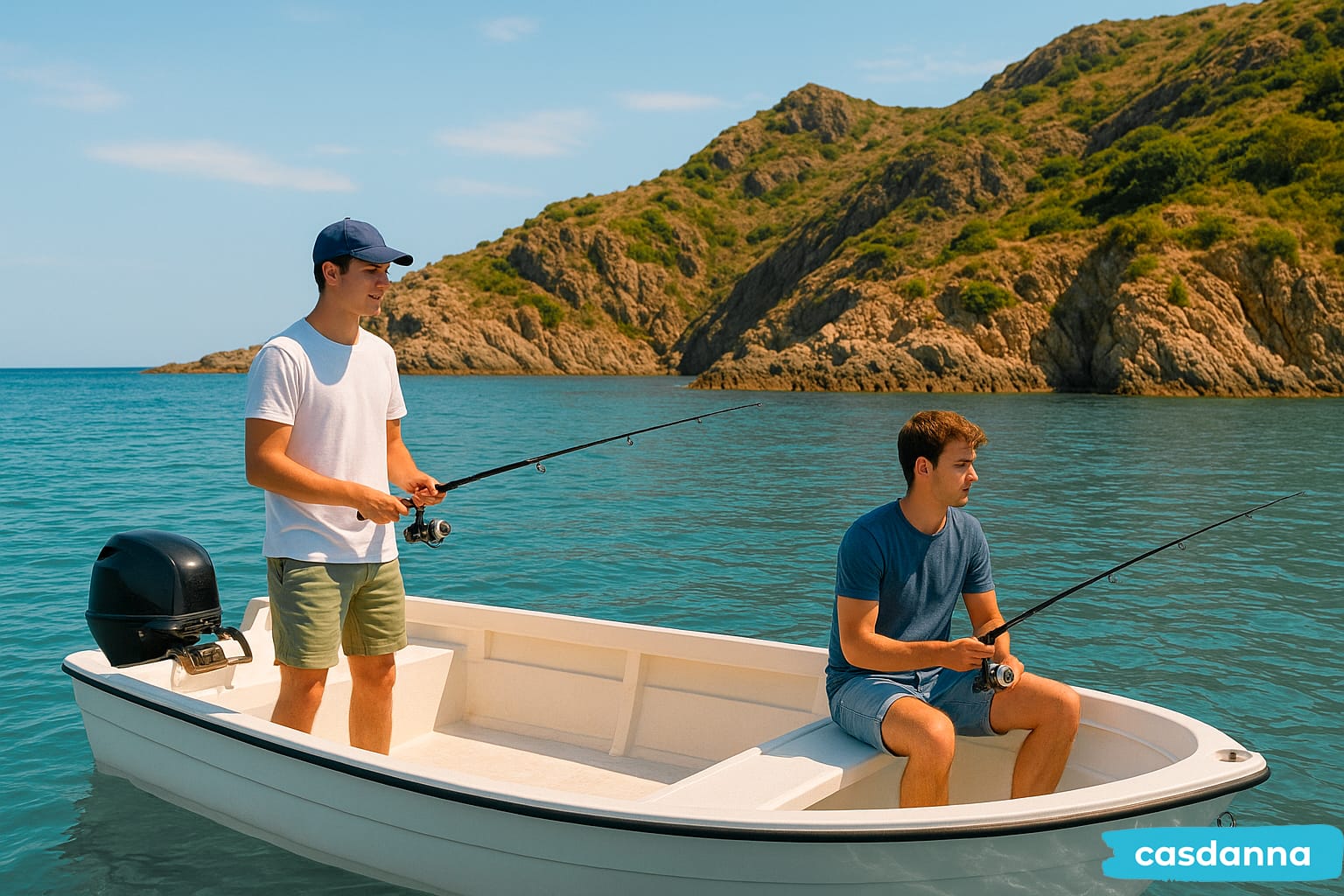
📍 Where can you fish at Cap de Creus?
Along the road from Cadaqués to the Cap de Creus lighthouse you’ll find several small coves, ideal for trying surfcasting for seabass. In the north — avoid stretches that are inaccessible from land — you’ll head towards Port de la Selva. There you can fish in the harbour or on the beach, or look further east for a suitable rocky cove. The whole area is excellent for seabass — on the bottom, with a float (to reduce snags) or with spinning lures.
As well as seabass, you can also catch white seabream here; depending on the season, bonito or even tuna are possible.
Common species at Cap de Creus
- White seabream (Diplodus sargus) — French: Sar commun
- European seabass (Dicentrarchus labrax) — French: Bar européen
- Leerfish (Lichia amia) — French: Liche
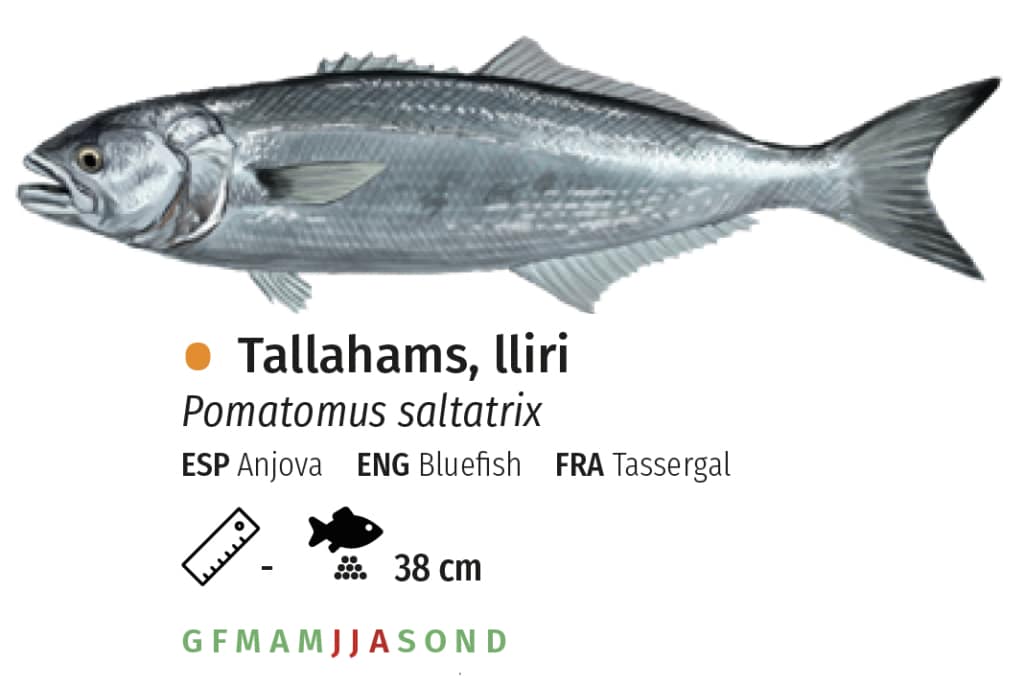
- Bluefish (Pomatomus saltatrix) — French: Tassergal
- Gilthead seabream (dorade) (Sparus aurata) — French: Dorade royale
Techniques & bait
- Spinning: sturdy, larger lures.
- Bottom fishing: crabs and “lombriz catalana” (a Catalan coastal/lugworm, very effective on sandy and mixed ground).
Useful information
Under Catalan regulations you can fish from the shore around the clock (00:00–24:00).
From a boat or when freediving/spearfishing, fishing is allowed between sunrise and sunset (exception: certain traps/“pots” under separate rules).
Per licence: max. 2 rods; hooks ≥ size 8 (approx. 12 mm long, 5 mm wide).
Maximum 3 m between your own rods; at least 10 m from other anglers’ rods.
Daily catch limits: fish up to 10 kg, cephalopods (squid/cuttlefish) up to 5 kg.
Sea urchins: harvesting only from 08:00–13:00, max. 150 per day, by hand using the traditional tool (“garotera”) or gentle devices that respect legal sizes and do not damage the seabed.
Guided trips are possible, e.g. tuna (15–50 kg) — extreme spinning (March–August) or popping at Cap de Creus; prices are usually over €600.
There are closed seasons (temporary fishing bans) for sea urchins, cuttlefish and octopus.
If you want to fish from your own boat, note the rules on navigation and anchoring in Cap de Creus Natural Park (English).
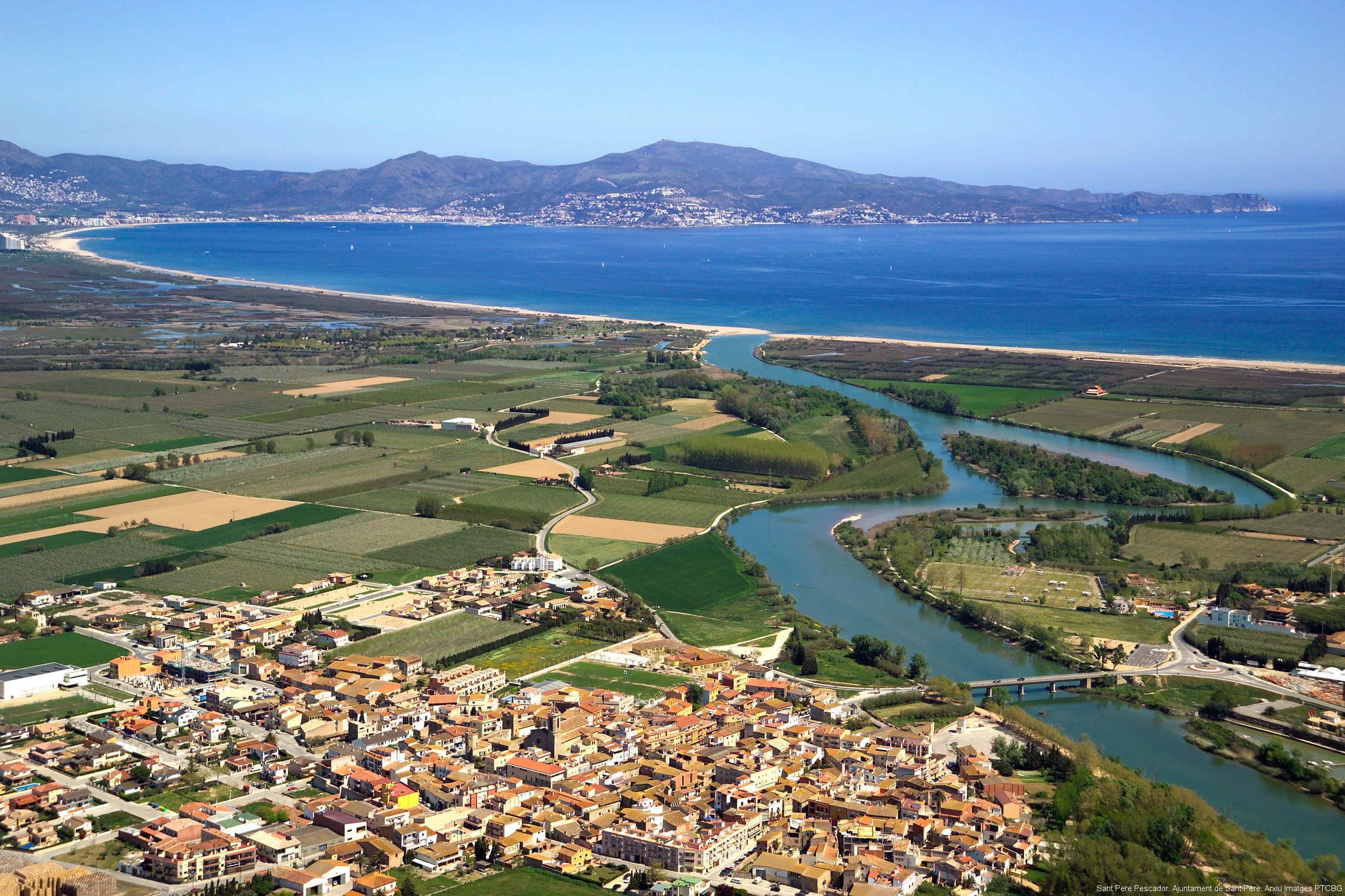
Sant Pere Pescador Beach
A long stretch of golden sand
The beach at Sant Pere Pescador is a stretch of fine, golden sand over 6 km long in the Gulf of Roses, beautifully located next to the Aiguamolls de l’Empordà Natural Park
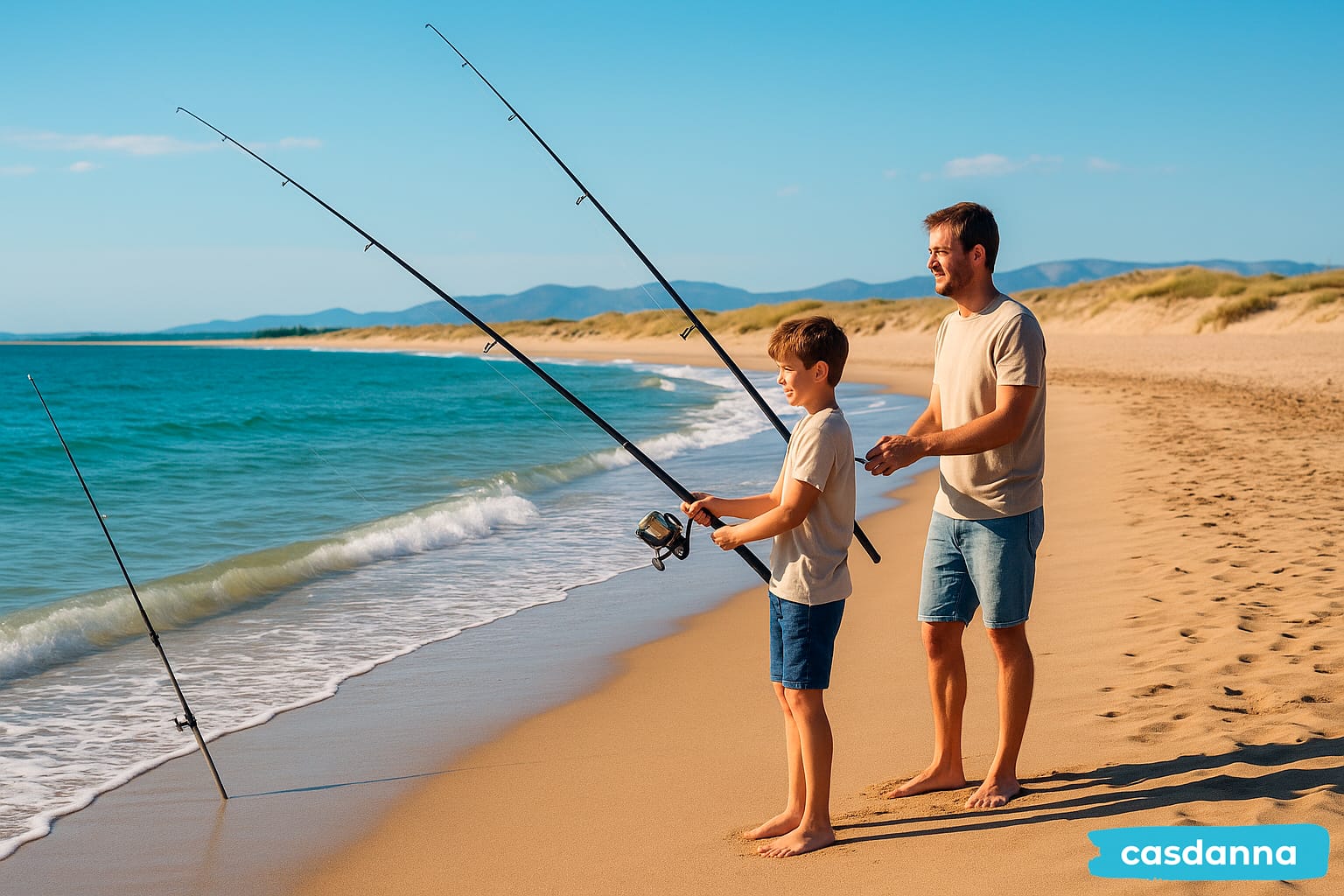
It’s easy to access and known for excellent watersports — especially kitesurfing, with designated zones — and ideal for surfcasting. The sandy bottom reduces the risk of snags and allows long casts to reach, for example, gilthead bream, seabass or even tuna.
Species at Sant Pere Pescador Beach
Depending on conditions you can catch white seabream, sand steenbras, gilthead bream or even mackerel. Near the mouth of the River Fluvià, more seabass move into the coastal waters. Watch the wind: on very windy days it’s often worth waiting until sunset.
- Gilthead seabream (dorade) — Sparus aurata
- European seabass — Dicentrarchus labrax
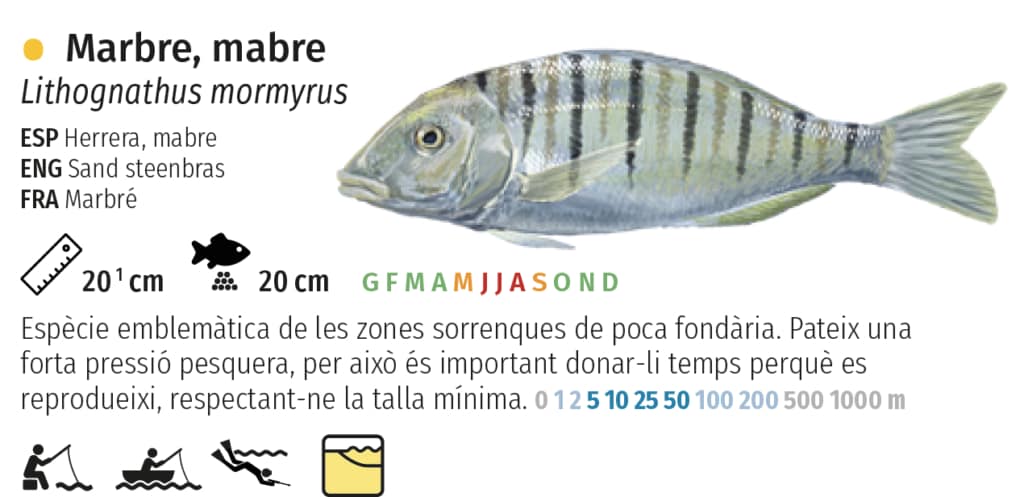
- Sand steenbras — Lithognathus mormyrus
- Leerfish — Lichia amia
- Blackspot seabream — Pagellus bogaraveo
- Thicklip grey mullet — Chelon labrosus
- Pompano — Trachinotus ovatus
Casdanna Roses